Earth-Like World: What Are the Proven Signs Found?
Earth-Like World discoveries reveal exciting signs beyond Neptune. Learn more about this groundbreaking find!
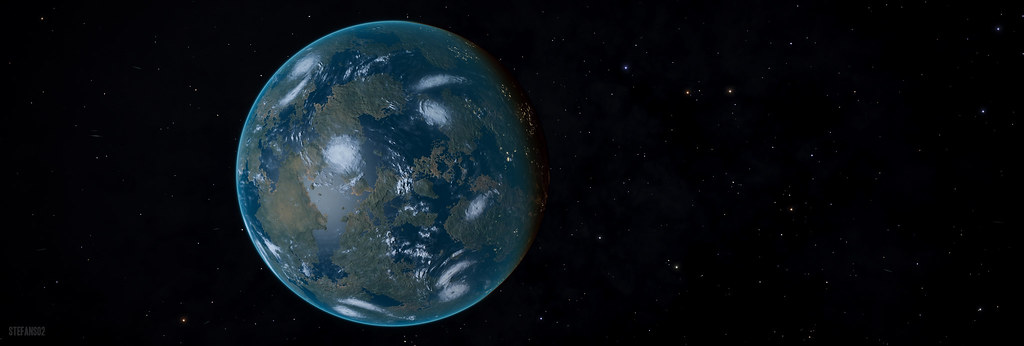
Earth-Like World discoveries are reshaping our understanding of the cosmos. Astronomers have found signs of a second Earth-like planet in the space beyond Neptune, sparking curiosity about potential life beyond our solar system.
What Is an Earth-Like World?
An Earth-Like World refers to a planet that shares characteristics similar to those of Earth, making it potentially habitable. These worlds typically possess a rocky surface, a suitable atmosphere, and the presence of liquid water, which are essential for supporting life as we know it.
Astronomers have been on the lookout for such planets, especially in the search for extraterrestrial life. Several criteria are evaluated when identifying an Earth-Like World:
- Size: It should be similar in size to Earth, allowing for a stable atmosphere.
- Distance from its star: The planet must orbit within the habitable zone, where temperatures allow for liquid water.
- Atmospheric conditions: A suitable atmosphere is crucial for protecting potential life forms from harmful solar radiation.
Recent discoveries have raised excitement in the scientific community as more signs of Earth-Like Worlds emerge beyond our solar system.
The Significance of Finding a Second Earth
The discovery of an Earth-Like World beyond Neptune holds profound implications for our understanding of the universe. As astronomers identify planets with conditions similar to our own, the potential for life beyond Earth becomes a tantalizing reality. This finding is not merely a scientific curiosity; it challenges our perceptions of habitability and our place in the cosmos.
Identifying a second Earth opens up several avenues for research and exploration:
- Understanding Habitability: Scientists can study the atmospheres and climates of these worlds to assess their potential to support life.
- Evolution of Planets: Insights gained could reveal how diverse planetary systems evolve and the factors that contribute to their development.
- Search for Extraterrestrial Life: The more Earth-Like Worlds we discover, the greater the chances of finding life beyond our own planet.
Ultimately, these discoveries inspire humanity to look outward, sparking curiosity and a desire for exploration.
How Do Astronomers Discover New Planets?
Astronomers utilize a variety of techniques to discover new planets, particularly those resembling an Earth-Like World. One prominent method is the transit method, which involves monitoring the brightness of stars for periodic dimming. This dimming occurs when a planet transits, or passes in front of, its host star, blocking a fraction of its light.
Another technique is radial velocity, where astronomers measure the wobble of a star caused by the gravitational pull of an orbiting planet. This method can reveal the planet’s mass and distance from the star. Additionally, direct imaging allows scientists to capture images of planets by blocking out the star’s light, providing insights into their atmospheres and surface conditions.
Through these methods, researchers continue to expand the catalog of potentially habitable planets, bringing them closer to confirming the existence of an Earth-Like World beyond our solar system.
Recent Advances in Planetary Science
Recent advances in planetary science have significantly enhanced our understanding of Earth-like worlds. With innovative technologies and refined methodologies, astronomers are uncovering critical data that suggest the existence of planets resembling our own.
One of the most notable breakthroughs involves the use of space telescopes, which allow scientists to observe distant exoplanets in unprecedented detail. Key techniques such as:
- Transit photometry – measuring the dimming of stars when a planet passes in front of them.
- Radial velocity – detecting the gravitational tug of a planet on its star.
- Direct imaging – capturing images of planets by blocking out their star’s light.
These methods have led to the identification of several candidates that exhibit characteristics similar to Earth, fueling excitement about the possibility of finding a true Earth-like world in our galaxy.
Potential for Life Beyond Our Solar System
The discovery of an Earth-like world is more than just a scientific milestone; it opens up the potential for life beyond our solar system. Recent findings suggest that certain exoplanets possess conditions similar to those on Earth, including the presence of water and a suitable atmosphere.
These characteristics make them prime candidates for hosting life. Scientists are particularly excited about:
- Liquid Water: Essential for life as we know it, liquid water is a key indicator of habitability.
- Stable Atmosphere: A protective atmosphere can shelter potential life forms from harmful cosmic radiation.
- Temperature Regulation: Earth-like worlds located in the habitable zone of their stars maintain temperatures conducive to life.
As technology advances, the quest for understanding these extraterrestrial environments continues, fueling hopes of discovering intelligent life forms that may share our universe.
Future Missions to Explore New Worlds
As the quest for an Earth-Like World continues, future missions are being planned to explore distant exoplanets. These missions aim to gather more data about the atmospheres and compositions of newly discovered planets, potentially revealing signs of habitability.
Several space agencies, including NASA and ESA, are developing advanced telescopes and spacecraft equipped with cutting-edge technology. These tools will enhance our ability to:
- Measure atmospheric conditions on exoplanets
- Detect chemical signatures indicative of life
- Map surface features similar to those on Earth
Furthermore, missions like the James Webb Space Telescope are expected to provide unprecedented insights into the characteristics of Earth-Like Worlds, paving the way for future exploration and the possibility of discovering extraterrestrial life.
By Stefans02 via Openverse